 New Funding Resources
Last Updated on May 29, 2026 by Kyle Sennott
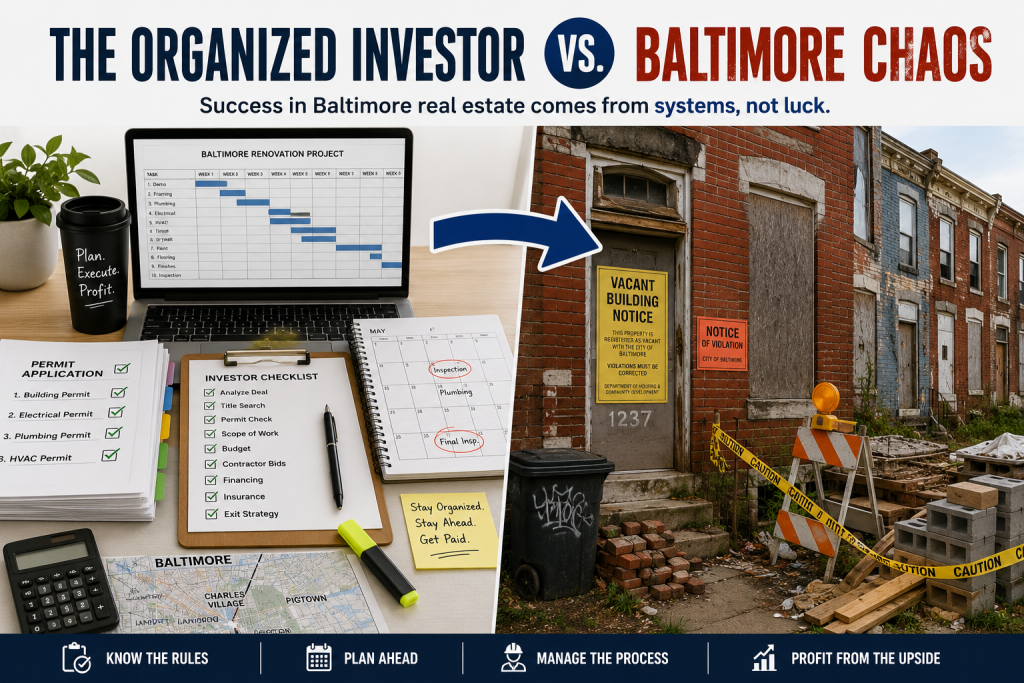
If you spend enough time investing in Baltimore real estate, eventually you’ll meet one of the city’s most infamous characters: the Vacant Building Notice.
It usually arrives quietly. No dramatic music. No flashing lights. Just a piece of paper with the emotional warmth of a parking ticket and the power to derail your project timeline if you are not paying attention. For experienced Baltimore investors, vacant properties can create incredible opportunities. Lower acquisition prices, historic rowhomes, and strong renovation margins continue to attract investors to Baltimore City year after year. But Baltimore investing is not for the disorganized. This is not the market where you buy a boarded-up rowhome on Friday and casually “figure it out later.” Baltimore has a remarkable ability to punish chaos with bureaucratic creativity.
What Is a Vacant Building Notice?
In Baltimore City, a property may receive a Vacant Building Notice when it is considered vacant, distressed, unsafe, or improperly maintained. Once a property is classified as vacant, the owner may face:
- annual vacant building fees,
- stricter code enforcement,
- repair requirements,
- registration obligations,
- and additional permitting scrutiny.
This becomes particularly important for investors purchasing distressed rowhomes, foreclosure inventory, inherited properties, or long-abandoned homes. And in Baltimore, there are many of them.
Why Investors Still Love Baltimore
Despite the headaches, Baltimore continues to attract experienced investors for one simple reason: The upside can be significant.Compared to many DC suburbs, Baltimore often offers:
- lower acquisition costs,
- larger renovation spreads,
- stronger percentage-based margins,
- and neighborhoods undergoing major transformation.
A skilled investor can still create substantial value through renovation projects here. But Baltimore rewards preparation, systems, and execution. It does not reward optimism unsupported by spreadsheets.
Vacant Notices Can Slow Projects Down
One of the biggest mistakes newer investors make is underestimating Baltimore timelines. A Vacant Building Notice can trigger:
- inspections,
- permitting scrutiny,
- repair requirements,
- licensing questions,
- and additional administrative hurdles.
In other words, your “quick six-month flip” can suddenly develop a very complicated personality. Experienced Baltimore investors build delays into their underwriting from the beginning. Newer investors often assume: “We’ll deal with it after closing.” That sentence has financially injured many people.
How Investors Avoid Vacant Building Problems
One of the smartest things Baltimore investors can do is avoid vacant classification in the first place. Because once the city officially labels a property vacant, projects often become more expensive and more time-consuming.
Experienced investors typically move quickly after closing to:
- secure doors and windows,
- remove trash and debris,
- maintain landscaping,
- and eliminate obvious safety concerns.
A property with broken windows, collapsing gutters, and waist-high weeds essentially sends Baltimore an engraved invitation to investigate. Momentum also matters. Successful investors keep projects visibly active:
- permits pulled,
- contractors moving,
- inspections scheduled,
- and renovations progressing.
A half-gutted rowhome sitting untouched for nine months tends to attract the wrong kind of attention. Baltimore is surprisingly observant when a property looks frozen in time. Many experienced investors also keep utilities active early in the project and stay highly organized with:
- permit tracking,
- inspections,
- contractor scheduling,
- and city correspondence.
Behind many successful Baltimore projects is someone staring intensely at spreadsheets while drinking their third coffee of the day.
Baltimore Is Extremely Block-by-Block
One of the unique realities of Baltimore investing is that conditions can change dramatically from one block to another.
A project near:
- Canton,
- Patterson Park,
- Hampden,
- Highlandtown,
- Charles Village,
- or Station North
may operate under completely different market dynamics than a property just a few streets away.
That means:
- buyer expectations,
- renovation standards,
- ARVs,
- permit scrutiny,
- and resale timelines
can vary significantly.
This is why local knowledge matters so much in Baltimore. Investors unfamiliar with the city sometimes evaluate deals using broad assumptions that simply do not hold up block-by-block.
Vacant Properties Often Hide Expensive Surprises
Many investors focus heavily on acquisition price while underestimating operational costs.
Vacant properties may require:
- boarding compliance,
- roof replacement,
- masonry repairs,
- plumbing updates,
- water line work,
- structural reinforcement,
- pest remediation,
- lead paint mitigation
- and even legal expenses removing squatters from premises.
And because many Baltimore rowhomes are older, surprises behind walls are practically part of the city’s architectural heritage.
You are not always renovating a house.
Sometimes you are negotiating with 120 years of questionable decisions.
Financing Matters in Baltimore
This is also why financing structure matters so much. Many traditional lenders struggle with:
- distressed properties,
- heavy renovations,
- vacant homes,
- incomplete kitchens,
- or major deferred maintenance.
At New Funding Resources, we regularly work with investors financing value-add and distressed projects across Baltimore and the broader DMV market. Local experience matters because Baltimore projects often require:
- realistic timelines,
- flexible underwriting,
- renovation awareness,
- and understanding of neighborhood-specific dynamics.
Fast closings help. But organized execution matters even more.
Due Diligence Is Everything
Before purchasing a vacant property in Baltimore, investors should carefully review:
- vacant building status,
- permit history,
- title issues,
- utility conditions,
- tax balances,
- code violations,
- and neighborhood sales activity.
The Baltimore City DHCD Vacants to Value Program is also an excellent resource for understanding how Baltimore handles vacant properties and redevelopment initiatives.
Final Thoughts
Baltimore remains one of the most interesting real estate investment markets on the East Coast.
There is real upside here:
- strong renovation potential,
- historic housing stock,
- improving neighborhoods,
- and opportunities that simply no longer exist in many higher-priced markets.
But Baltimore investing rewards disciplined operators. The city can absolutely make money for experienced investors. It can also humble disorganized ones with astonishing efficiency. If you are investing in Baltimore, optimism is helpful.
Spreadsheets are better.


Leave a Reply