 New Funding Resources
Last Updated on April 7, 2026 by Kyle Sennott
What Are Condo Conversions in DC?
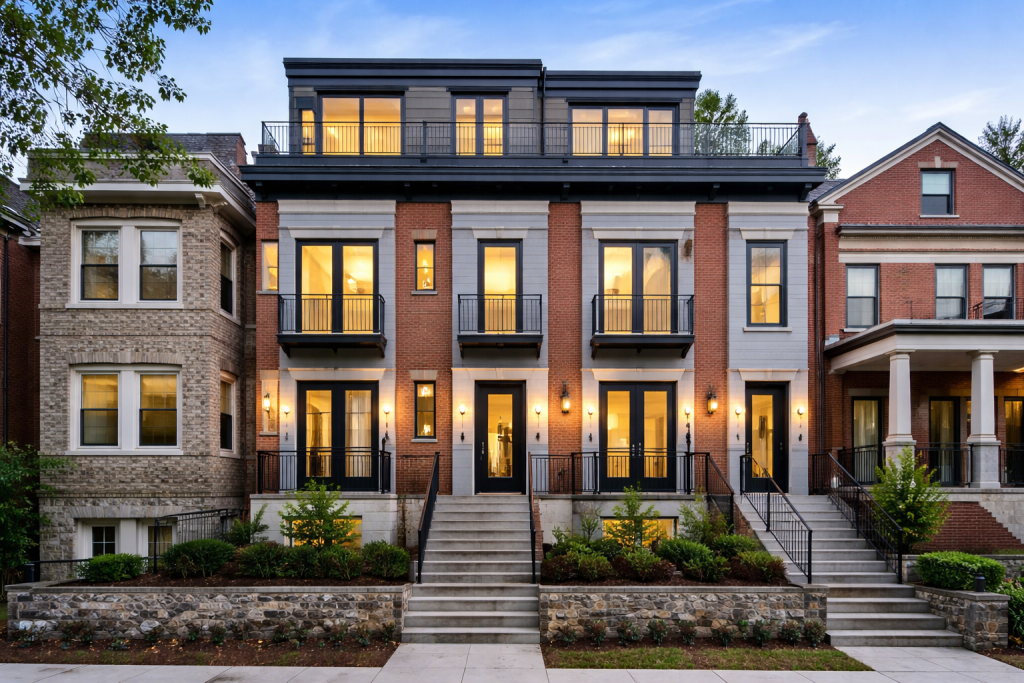
Condo conversions in DC involve transforming a single-family property, typically a row house, into multiple legally separate condominium units that can be sold individually.
For real estate investors in Washington, DC, this strategy allows you to increase density, maximize square footage, and significantly boost resale value in a land-constrained market.
Why Condo Conversions in DC Are Booming
Condo conversions in DC have become one of the most profitable strategies for experienced investors.
Washington, DC has:
- Limited developable land
- Strong buyer demand
- High price per square foot
Because of this, investors are building up instead of out.
A narrow row house can be expanded vertically and reconfigured into 2 to 4 high-end condominiums, often producing higher total resale value than a traditional flip. In many neighborhoods, well-designed DC condo conversions can compete directly with single-family homes on price.
Are Condo Conversions in DC Worth It?
The short answer: yes, if executed correctly.
Example:
- Purchase price: ~$600,000
- Convert into 3 condo units
- Sell each unit: $400,000–$600,000
That’s the kind of spread that attracts serious investors.
However, condo conversions in DC only work when:
- The neighborhood supports condo demand
- Units are properly sized and designed
- Finishes align with buyer expectations
This is not a “build it and they will come” scenario. It’s a market-driven strategy.
Step 1: Analyze the Condo Market (Not Just Row Homes)
Before starting any condo conversion in DC, study:
- Recent condo sales (not just single-family comps)
- Days on market
- Unit size and layout trends
- Price per square foot
Each DC neighborhood behaves differently. What works in Logan Circle may not work in Brookland. Understanding demand is the foundation of successful Washington, DC condo conversions.
Step 2: Zoning and Build Potential
Zoning determines what’s possible in condo conversions in Washigton,,DC:
- Number of units allowed
- Ability to raise the roof (pop-top)
- Expansion of footprint
You may also need:
- Special approvals for structural changes
- Neighbor coordination
- Historic district compliance
Skipping zoning research is one of the most common mistakes investors make.
Step 3: Construction Complexity
Condo conversions in Washington, DC are significantly more complex than standard renovations.
Typical requirements include:
- Underpinning the foundation
- Separate electrical, plumbing, and HVAC systems
- Soundproofing between units
- New layouts and access points
Timeline comparison:
- Fix-and-flip: 4–6 months
- Condo conversion in DC: 12–24 months
This extended timeline must be factored into your holding costs and financing strategy.
Step 4: Understanding TOPA (Tenant Rights)
If the property is occupied, condo conversions in DC must comply with the Tenant Opportunity to Purchase Act (TOPA).
This requires:
- Offering tenants the first opportunity to purchase
- Allowing time for tenant response
- Potential buyouts or negotiations
TOPA can significantly delay a project and must be accounted for early.
Step 5: The Legal Process for Condo Conversions in DC
Condo conversions in DC require a structured legal and regulatory process.
Key Steps:
1. Eligibility Application
Submit to the Department of Housing and Community Development (DHCD)
2. Public Offering Statement (POS)
Prepared by an attorney and approved by DHCD
3. Subdivision and Survey
Create and record a condominium plat with the Office of the Surveyor
4. Building Permits and Construction
All structural work must be permitted and inspected
5. Condo Registration
Register with the Department of Buildings (DOB)
6. Final Certificates of Occupancy
Required before selling individual units
Typical Costs:
- ~$100 per unit (POS filing)
- ~$495+ for plat recordation
- Legal, architectural, and survey fees
For official guidance, refer to the DC Department of Housing and Community Development: https://dhcd.dc.gov/
Step 6: Design That Sells
Successful condo conversions in DC are driven by design.
Buyers care about:
- Layout efficiency
- Natural light
- Modern finishes
- Functional living spaces
Overbuilding can reduce returns. Underbuilding can stall sales.
The goal is market-aligned design that maximizes value without overspending.
Common Mistakes in Condo Conversions in DC
Avoid these pitfalls:
- Ignoring condo market demand
- Underestimating construction complexity
- Failing to account for TOPA
- Over-improving beyond neighborhood standards
- Misjudging timeline and holding costs
Condo conversions in Washington, DC, reward precision and punish assumptions.
Condo Conversions vs Fix-and-Flip
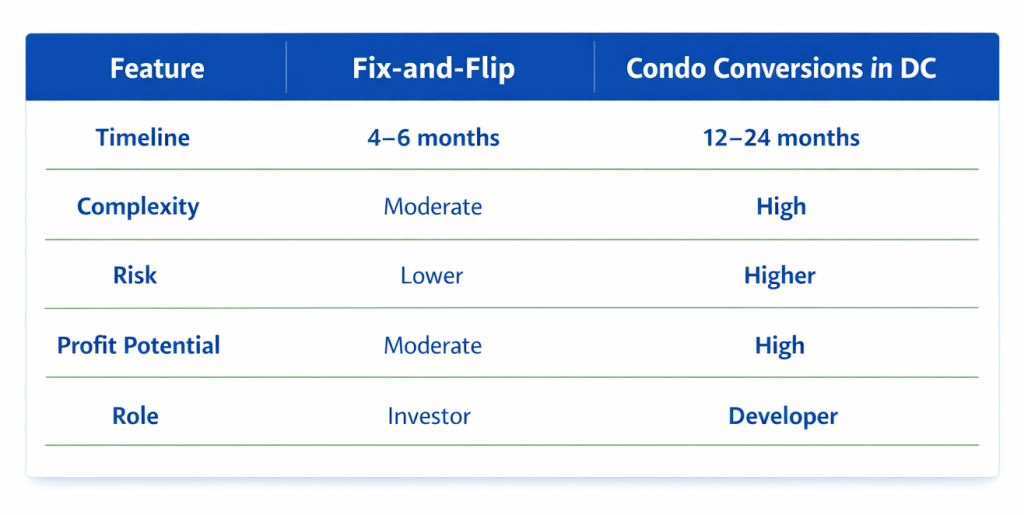
Condo conversions in Washington, DC, represent a shift from an investor to adeveloper mindset.
Financing Condo Conversions in DC
Traditional lenders often struggle with condo conversions due to:
- Longer timelines
- Construction complexity
- Regulatory requirements
At New Funding Resources, we specialize in financing condo conversions in Washington, DC.
Our hard money loans in Washington, DC offer:
- Fast approvals
- ARV-based underwriting
- Flexible construction financing
Final Thoughts on Condo Conversions in DC
Condo conversions in DC are one of the most powerful ways to unlock value in a supply-constrained market.
They require:
- Strong market analysis
- Careful planning
- Execution discipline
But for investors ready to take the next step, they offer a clear path from flipper to developer.
Frequently Asked Questions About Condo Conversions in DC
How long do condo conversions in DC take?
Most condo conversions in DC take between 12 and 24 months due to permitting, construction, and approvals.
Do you need permits for condo conversions in DC?
Yes. Condo conversions in DC require building permits, DHCD approval, and registration with the Department of Buildings.
Are condo conversions in DC profitable?
Yes, condo conversions in DC can be highly profitable if the market supports demand and the project is executed correctly.


Leave a Reply