Financial scams are life’s unfortunate reality, and hard money scams are no exception. As the hard money industry matures, the number of entities that engage in questionable ways of doing business goes up. Unscrupulous practices might range from false advertising and interest-rate bait-n-switch to collecting substantial upfront fees and then refusing to fund a loan.

Uncategorized
Should I Pay Cash for an Investment Property?
In our previous blog, we’ve addressed one of the most frequently asked questions: Is a hard money loan considered cash? Now that we’ve covered when a hard money loan is equivalent to cash and why, it’s time to discuss their differences. In other words, should you pay cash for an investment property or should you borrow money instead? To come up with a strategy that is right for you, let’s discuss the advantages and disadvantages of each way.
Recently I spoke to a brand-new investor who asked us to look at a loan scenario for him. A deal he wanted to discuss was not particularly strong. In fact, my numbers showed him making just over $6,000 in profit. After we talked more, he confessed he was thinking about purchasing the property all-cash, to “test the waters” and “eliminate additional expenses.” Were he to bypass a lender and pay his way with his own cash, his profits would increase substantially.
Curb Appeal on the Budget: Rehabbers’ Secrets
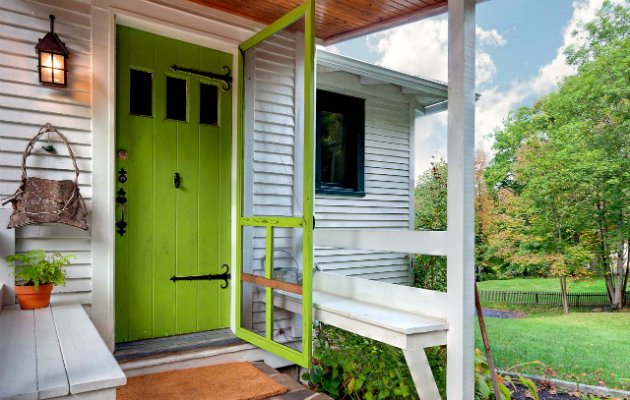
Spring is in the air, and things are abloom. Let’s be honest though: if you are a rehabber working on renovating a property, chances are you’ve not inherited a fragrant garden full of daffodils from the previous owners. You should consider yourself lucky if your backyard has not been used as a junkyard and does not contain dead pets (yes, we had a few of those). So how do you prevent your property from sticking up as a landscaping sore thumb without breaking your budget? Even more importantly, how do you increase its curb appeal in a way that is both quick and cost-efficient? Here are several time-tested tips that will save you time and money.
How to Become a Real Estate Investor
You’ve heard the success stories. A guy makes $50K profit in flipping a home in PG county. Another investor builds a multi-property real estate portfolio in Frederick County and is now managing it from her retirement home in Florida. The best part is that the majority of these stories are true. Whether you are looking to supplement your income or build long-term wealth, investing in real estate is a time-proven strategy.
Take Control of Your Future with Non-Recourse Self-Directed IRA Loans

Real estate rehabbers are natural-born entrepreneurs. Being a rehabber is like running your own business. You must be a marketer, a salesperson, a product expert, an accountant, and a people manager. Yes, it all means that you’re a control freak who insists on being directly involved in every aspect of his or her business. If it describes you, then read on. You can now also assume direct control of your retirement planning by learning more about investing in real estate via non-recourse self-directed IRA loans.
Growing Rich with Non-Recourse IRA Loans
The beauty of real estate investing is that it can make you money both in the short and the long term. If you are looking to supplement your current income, fixing and flipping properties is an ideal strategy to do so. For those with longer investment horizons, rehabbing and holding the properties as rentals offers an opportunity to build substantial equity over the years. However, there is another often-overlooked strategy that delivers incredible results. It’s investing in real estate via non-recourse IRA loans.
If you have an IRA retirement plan and interested in real estate investing, you owe to yourself to learn more about non-recourse loans and self-directed IRAs.
New Funding Resources